tourist /ˈtu̇r-ist/ noun 1 a person who travels to a place for pleasure 2 a member of a sports team that is playing a series of official games in a foreign country
********************
We are all tourists.
Physically because we all have places that we love to revisit, and places that we desire to visit. Unsurprisingly, these places for most people are islands or tropical locales—I’ve been to Mexico twice, it’s amazing or I definitely want to go to St. Croix next year are things that aren’t terribly uncommon to hear. The second definition doesn’t really apply to anyone, unless you’re involved in international sports (or the rare times an MLB or NFL team plays outside the US). In which case, hi Yasiel Puig, if you’re reading this.
There is also a social form of tourism in our lives too, and I use the word social here in a general sense and not one born out of the mandatory Internet industryspeak that infiltrated any use of the word for most of this century. (The Onion perfectly skewered its nonsensical overuse.) I believe that social tourism has been around since long before the ARPANET. It’s almost as old as art itself I think.
Social tourism in art exists primarily in two ways: in a very general way (i.e.-you seek out art that entertains you in a broad sense), or in a more specific, commentary-like way (i.e.-art that has a more specific message that impacts you on deeper levels). Obviously, both facets involve the act of being entertained. To use the vacation analogy: the general way would be like going to an all-in-one resort; the specific way would be venturing out to destinations farther removed from where you’re lodging. You have the music that you love, and the stations and concerts and venues that help you find more artists that make music similar to the style that you already love. Think of this as your Mexico or St. Croix. This is our default mode when it comes to art—I found the places I like to revisit and I know exactly how to get there. It starts to get different once new people and locales are introduced: the music that your boyfriend, girlfriend, spouse, children, friend or co-worker listen to. Their music might sound like the Yukon Territory to you, some place many people have no desire to go to.
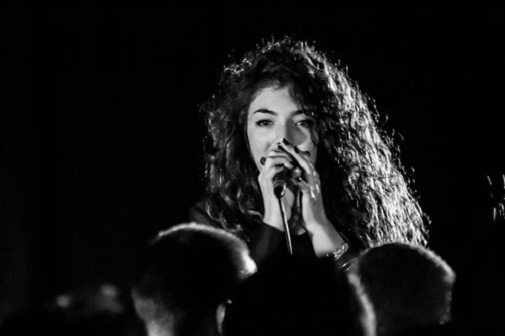
If we drill down further as to what social tourism means in art, I think Lorde represents a strong example of its deeper context. Lorde is a teenager whose music primarily attracts a teenage fan base, which is most certainly not St. Croix for most adults, and Lorde is from New Zealand. Regarding the former, oftentimes too many adults write off music by teenagers as being vapid, ephemeral, soulless, whatever, just as kids will write off the music of their parents’ and grandparents’ as ridiculous, stodgy, tragic, uncool, whatever. There is probably no remedy for this but it’s culturally ingrained and worth pointing out because music at these age gaps is an either/or proposition: it’s either great or it’s shit, and no in between. We need to re-think that.[1] Regarding the latter, her home country is worth pointing out especially if you are reading this and are American.
We Americans live in an entertainment bubble. Hollywood is a huge commodity we export around the world, to the point that I think it becomes nearly impossible to fully grasp how other countries digest (or reject) our culture. We sit behind a gigantic projector that faces the rest of the world and all we really see is a lot of colors, but what are the colors making? What is it selling? What subtle cultural mutations are being made before its packaged to different countries?
I was talking to someone a few months ago about Lorde and they said that, after the success of “Royals” had made it an inescapable hit, that people on Black Twitter and Black Facebook were irritated by Lorde’s rejection of hip hop culture. Truth be told, I never once thought of the song in these terms especially with regards to how the video was shot with its almost Calvin Klein-ish feel instead of ironically playing on racial stereotypes. But there was a feeling that she was calling out black hip hop culture out by her laundry list chorus of excess (Maybachs, gold teeth, Cristal)–excess that, let’s be honest, is often also referenced by (usually older white male) racists who believe that reverse racism is a real thing because black people get to say nigger and they cannot. Taken at face value, yeah, I guess it could look like Lorde is hitting the stereotype targets of perceived black male excess, but here’s where her tourist status comes into play. She’s an Kiwi commenting on and rejecting a very American set of pop culture tropes. It is not far-fetched to assume that our entertainment exports took some root down there; Hollywood is nothing if not colonial in nature. It makes sense for a kid (she was 15 when she wrote the song) to reject some of the progenitor’s projections.
“My friends and I we’ve cracked the code
We count our dollars on the train to the party
And everyone who knows us knows
That we’re fine with this, we didn’t come from money”
You can read this set of lyrics from “Royals” as either being the normal thought process of a teenager put to paper or a winking embellishment to make Lorde seem “more real” (celebrities: they’re just like us!). You might not even like “Royals” anyway. To me, “Royals” is everything that is right about what pop music is and what it can be. The music is simple and yet so so catchy. Her voice is terrific, the kind that certainly sounds older than her age but also the kind that when you first hear it you have no idea what the singer looks like. There’s something to be said about a voice that can elicit a diverse range of potential images in your mind. I love this song. I love that she wants to be a ruler and a queen bee. I love that the inspiration for the song title was her stumbling upon a National Geographic picture of George Brett. I love that finger snapping accents the beat.
A teenager from New Zealand has written one of the best pop songs so far in this early decade. This is a great thing as it’s not often that kids can infiltrate adults’ music tastes in meaningful ways. This kind of tourism is a good thing: listen to things you might not otherwise listen to. You’ll be pleasantly surprised every once in a while, especially music from other cultures. Some of them might reject American tropes or ideas and that’s a good thing, as sometimes it’s good to get out from behind the projector and see what other cultures are seeing.
Be a tourist more often. It beats the alternative: a reactionary, angry xenophobe shackled to bad categorical thoughts.
Audio clip: Adobe Flash Player (version 9 or above) is required to play this audio clip. Download the latest version here. You also need to have JavaScript enabled in your browser.
[1] Some clarification: I’m not saying you can’t hate/despise/loathe Justin Bieber’s music, or that you have to listen to all of Selena Gomez’s Stars Dance in order to have an opinion of “Come & Get It,” but a hatred of Bieber or Gomez shouldn’t cloud judgment on every teenage artist. I hate Scorpions but I’d never say I hated an entire genre or age range of musicians simply because they exist.
[Correction: this post initially referred to Lorde's home country as Australia instead of New Zealand.]


Sorry, but Lorde is from New Zealand. She’s a Kiwi, not an Aussie. http://amerinz.blogspot.com/2014/05/nzmm-day-21-lorde.html
Too bad, too, because it totally wrecks that Randy Newman reference, which I loved: http://en.wikipedia.org/wiki/Lorde
i think i wanted her to be Aussie just for the “Political Science” reference. good catch, Roger.